AI/UX · Design Leadership · Where Impact Gets Made
I build high-performing, happy teams that achieve real impact. I work cross-functionally to align vision and create epic 0-1 products. I’m a catalyst for innovation who understands the big picture and the user’s world well enough to give them something they’ll actually love to use, even when they have no choice but to use it.
Two ways to work with me
For organizations that need someone to build the vision, lead the team, and make sure design has a seat at the table where impact gets made.
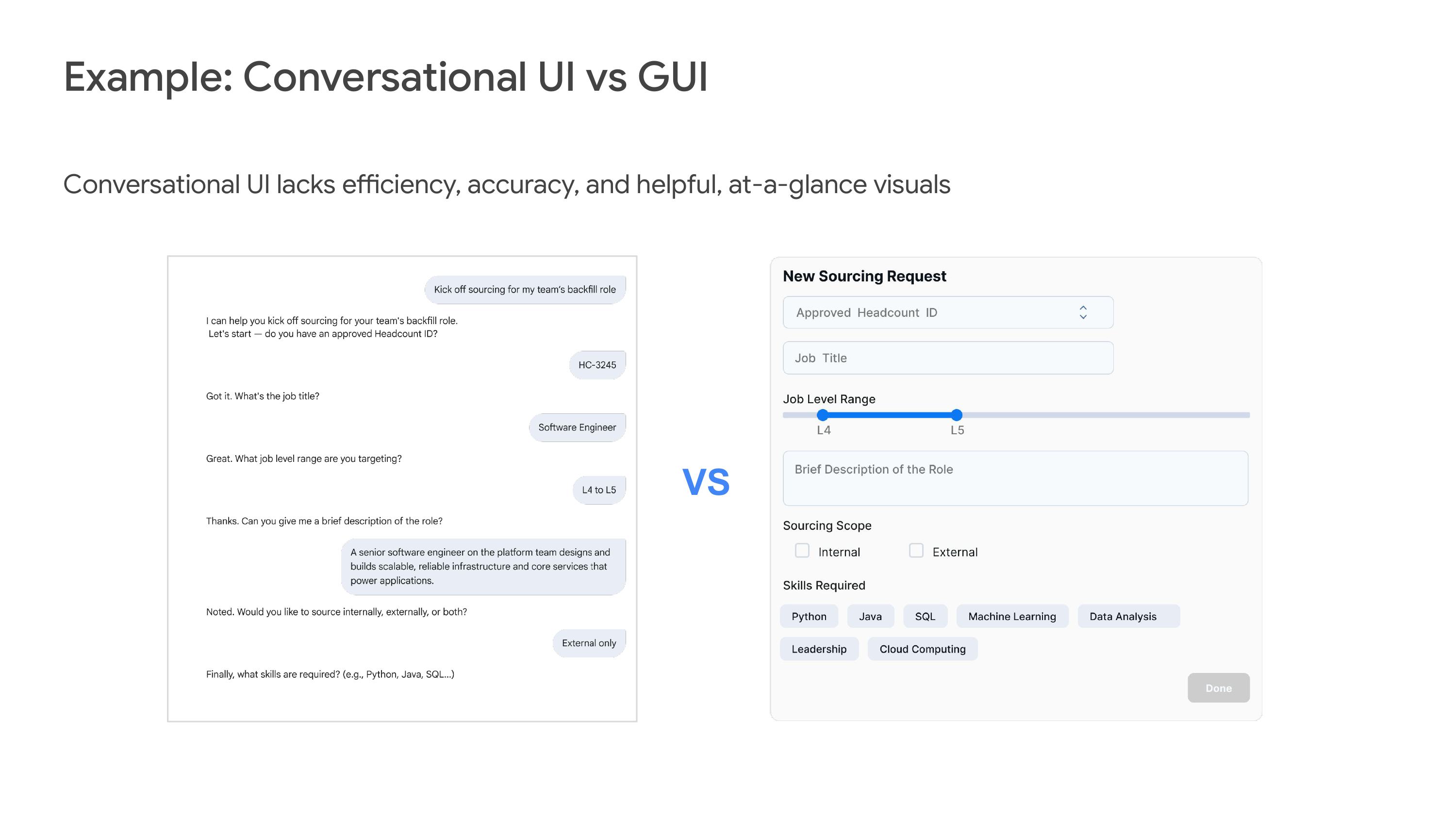
For organizations building or using AI platforms where adoption could be better. Let’s talk about what makes agents habit-forming.
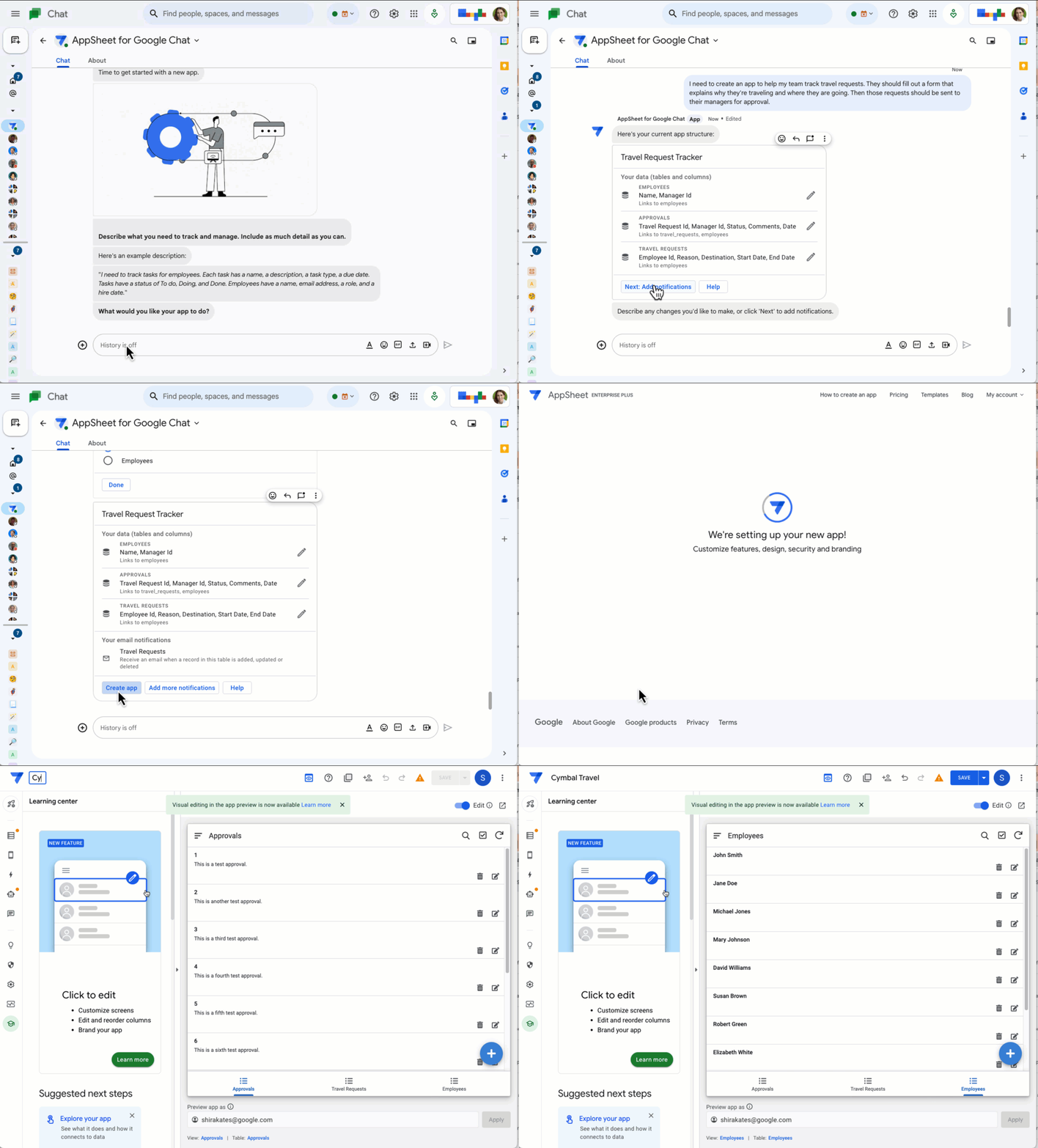
AppSheet was mid-transition from a technically-oriented platform to one built for business users, operating without a long-term UX direction to guide the work. I built a high-performing team, initiated a research-backed vision process, and ran a participatory design approach that aligned cross-functional stakeholders around a compelling strategic direction. We stress-tested the concepts with real enterprise customers at Google Cloud NEXT before roadmap planning.
AppSheet 3-Year UX Vision: Strategic framework defining how we might democratize app creation for every user type
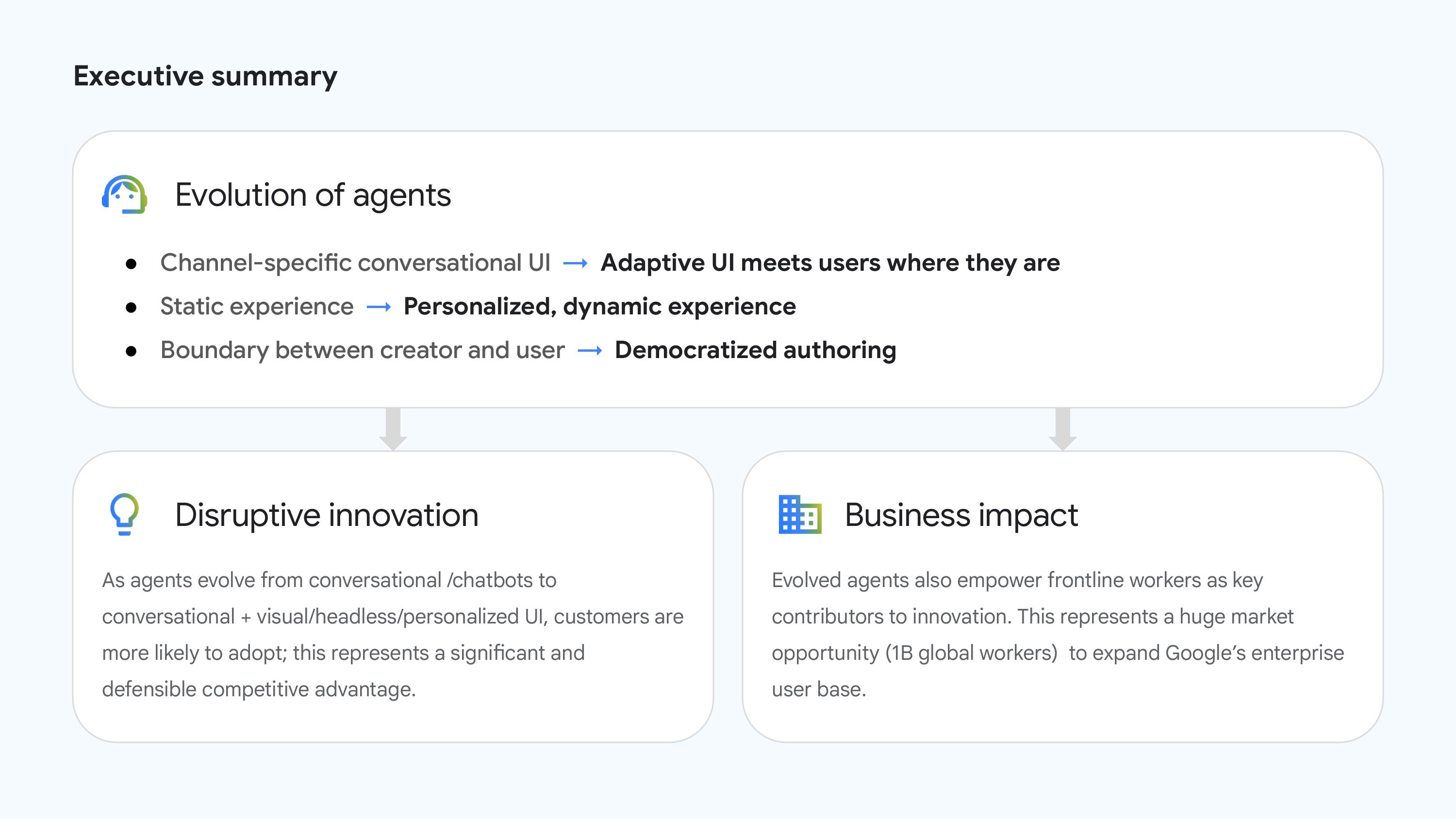
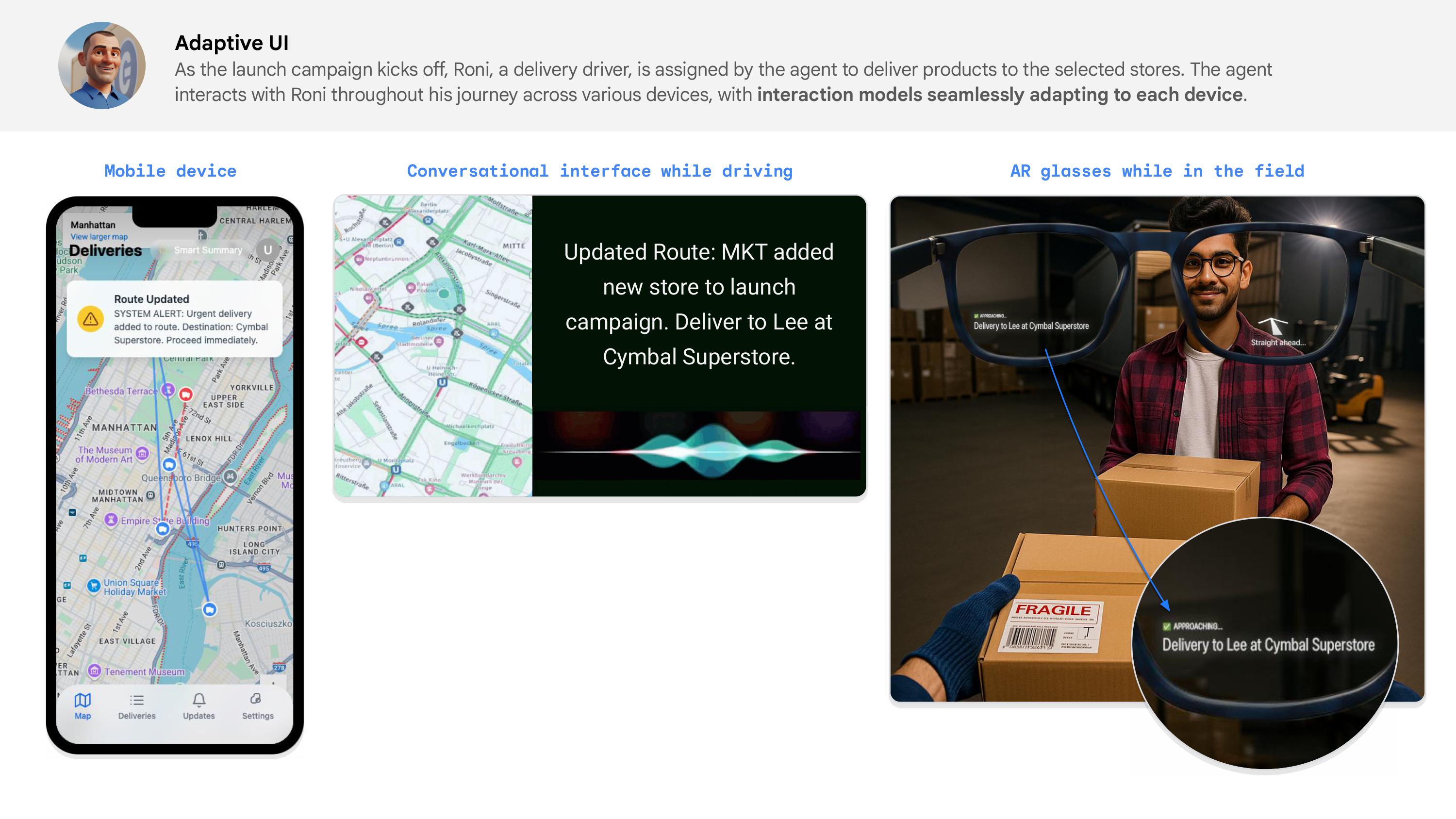
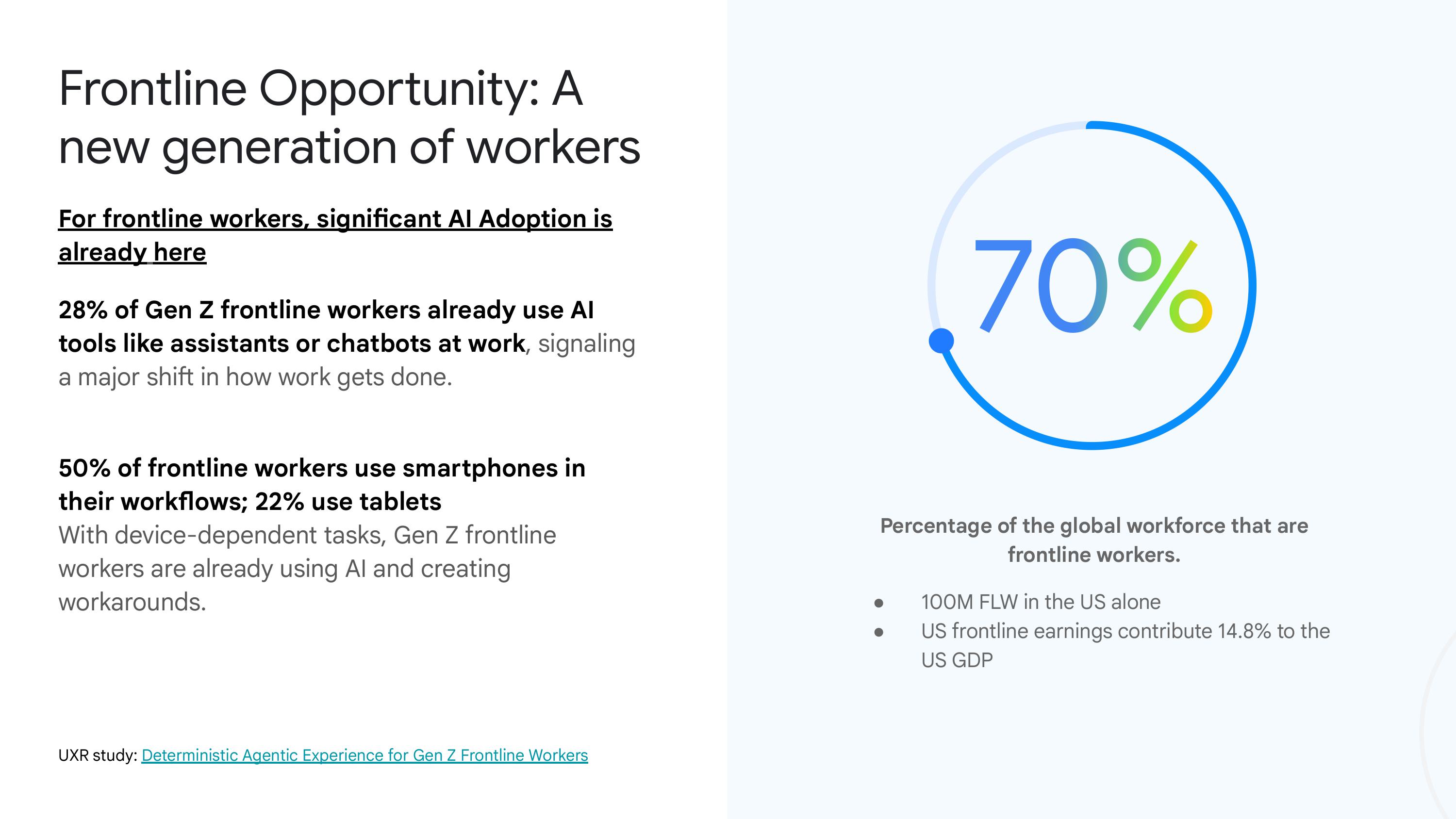
As AI agents began reshaping enterprise software, the entire industry was designing for knowledge workers and ignoring a billion-person global frontline workforce. I asked the question nobody else was asking, built the research case, and developed a framework for how agentic experiences need to evolve: from channel-specific chat to adaptive UI, from static to personalized, and the idea that was purely mine: from a clear creator/user boundary to democratized authoring, where workers shape their own tools through interaction rather than waiting for someone else to build for them.
Evolution of Agents: Three fundamental shifts in how agentic enterprise experiences need to evolve
Hero scenario: Cymbal Superstore, showing how evolved agents serve both knowledge workers and frontline workers
Most companies treat conversational AI as a technology and protocol problem. Get the rules right, keep humans in the loop, handle the edge cases. All of that matters. But adoption lives or dies on something simpler too: is this agent worth talking to? In 2021 I was pushing back on hiding AI from users when that was the industry default. At Google I was arguing that the prompt is not how humans naturally think. They start from problems, questions, documents. The companies that win on AI adoption will be the ones that treated the voice and personality of their agents as a strategic asset, not an afterthought.
Personalized agent guidance: evolved agents adapt instructions to each user’s experience level and context
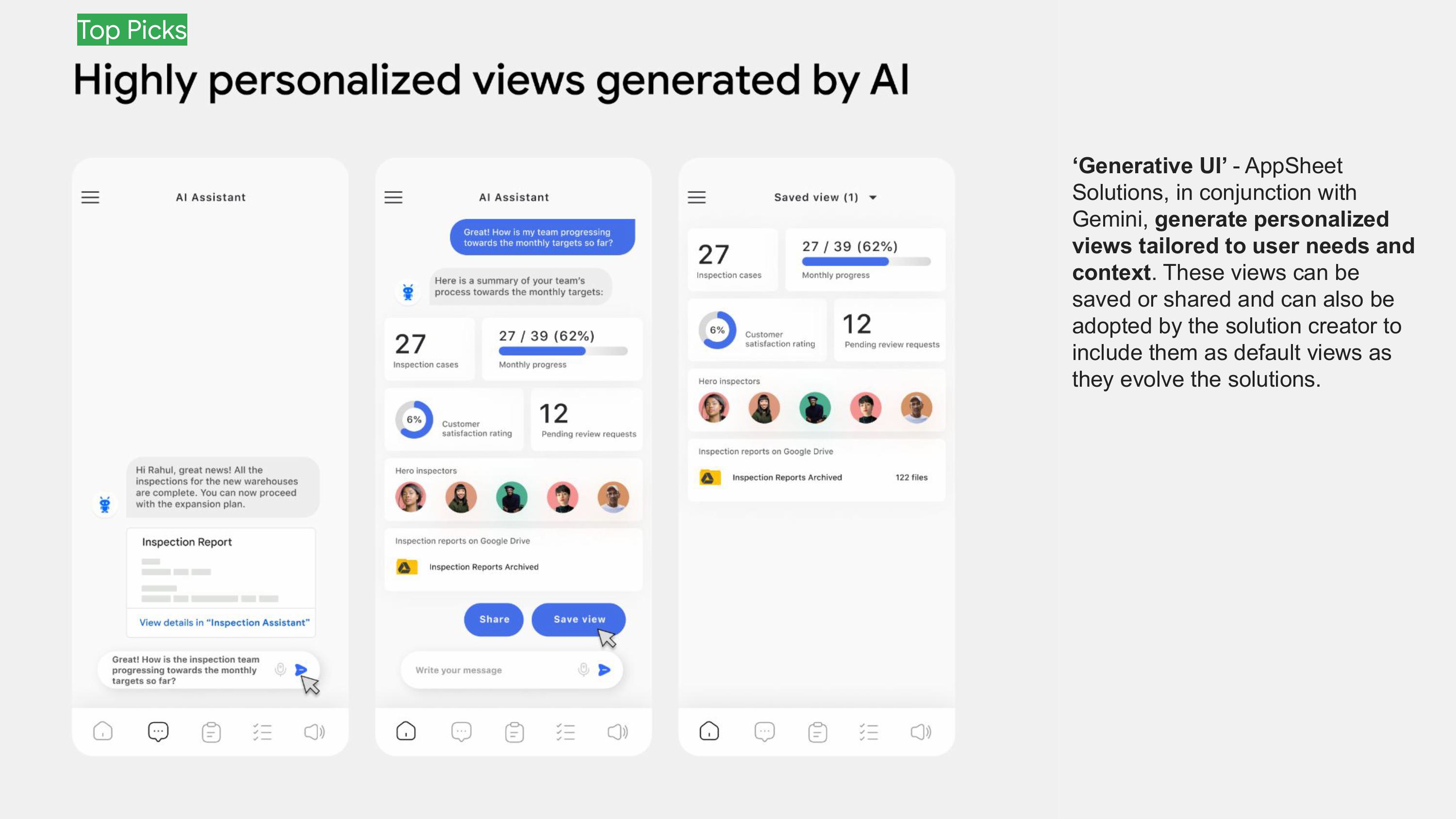
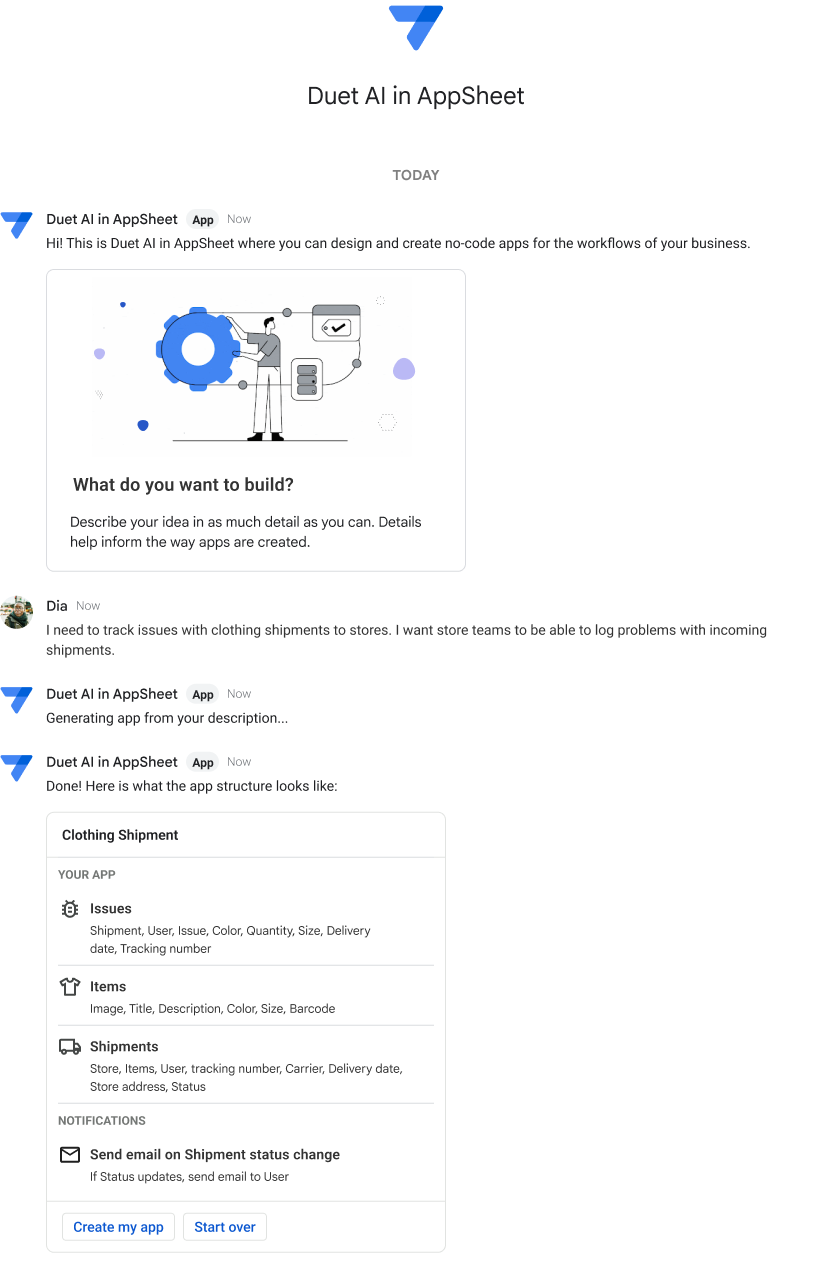
AI-generated personalized views: Generative UI that adapts to user needs and context in real time
About
I’m a design executive and AI/UX strategist with 20 years leading products from 0 to 1 across enterprise, consumer, and AI-powered experiences. I’ve been a CDO, a UX manager, a researcher, a content designer, a product manager, and a founder. The through-line is always the same: I find the hard problem and figure out what it actually needs.
At Google AppSheet I inherited a struggling team, rebuilt it, and built a product vision that influenced roadmaps at the VP level across Google Cloud AI. Before that I won a $25M federal contract as design lead at CivicActions. Before that I led a UX team through a $640M acquisition at BrightRoll. Before that I ran my own design consultancy for a decade.
I want to work on AI products that make people’s lives genuinely better, with teams that bring real craft and genuine curiosity to the table.
Let’s talk
What’s on your plate?